TeaTalk
XR Tea Experience with an AI Powered Conversational Virtual Tea Pet
Collaborative Work | 2022-now My Role: AR Experience Lead/Development
Augmented reality opens up a novel perspective in cultural engagement and education. It seeded our AR tea experience project TeaTalk
This project grew from our research into tea culture. Chinese tea culture is vast and profound, and its practices often involve nuanced rituals that words alone cannot fully convey. To truly understand, one must watch, listen, and engage directly.
We began by considering how to guide those who wish to immerse themselves more deeply in tea traditions. To make this learning process more interactive and engaging, we developed a virtual tea pet powered by large language model. It can be brought to life through an augmented reality headset, allowing learners to connect with the ritual in a vivid way.
It Starts Here
We researched various locations that could serve as tea classrooms in our exploration of how to teach tea culture. Ultimately, however, we found the most effective learning comes from shared, personal experience. The challenge lies in finding a truly knowledgeable teacher. Many people learn their rituals from those who are less experienced and sometimes pass along subtle inaccuracies.
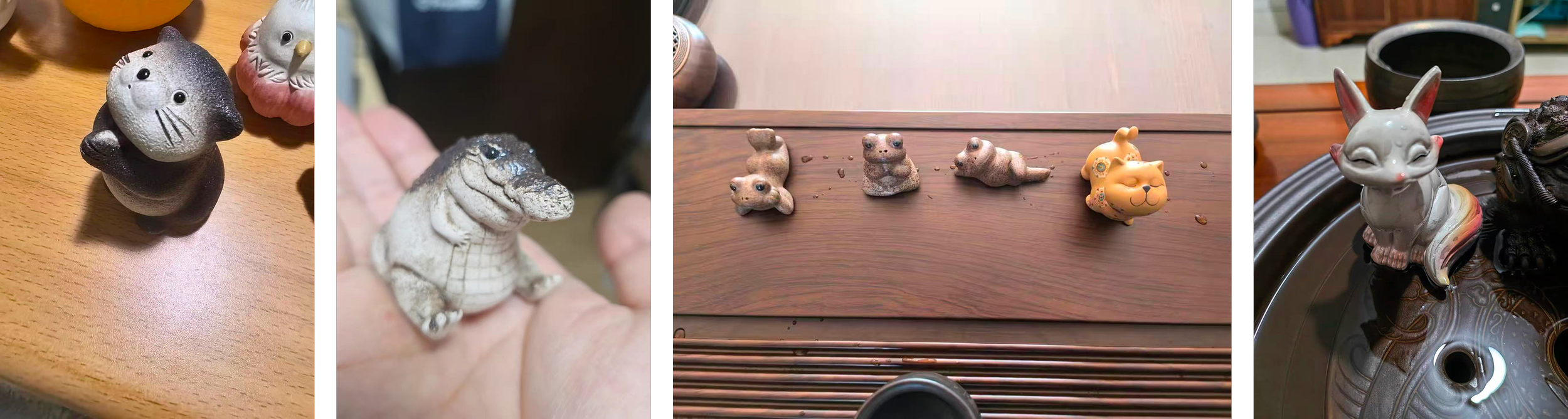
Teapet that we collected
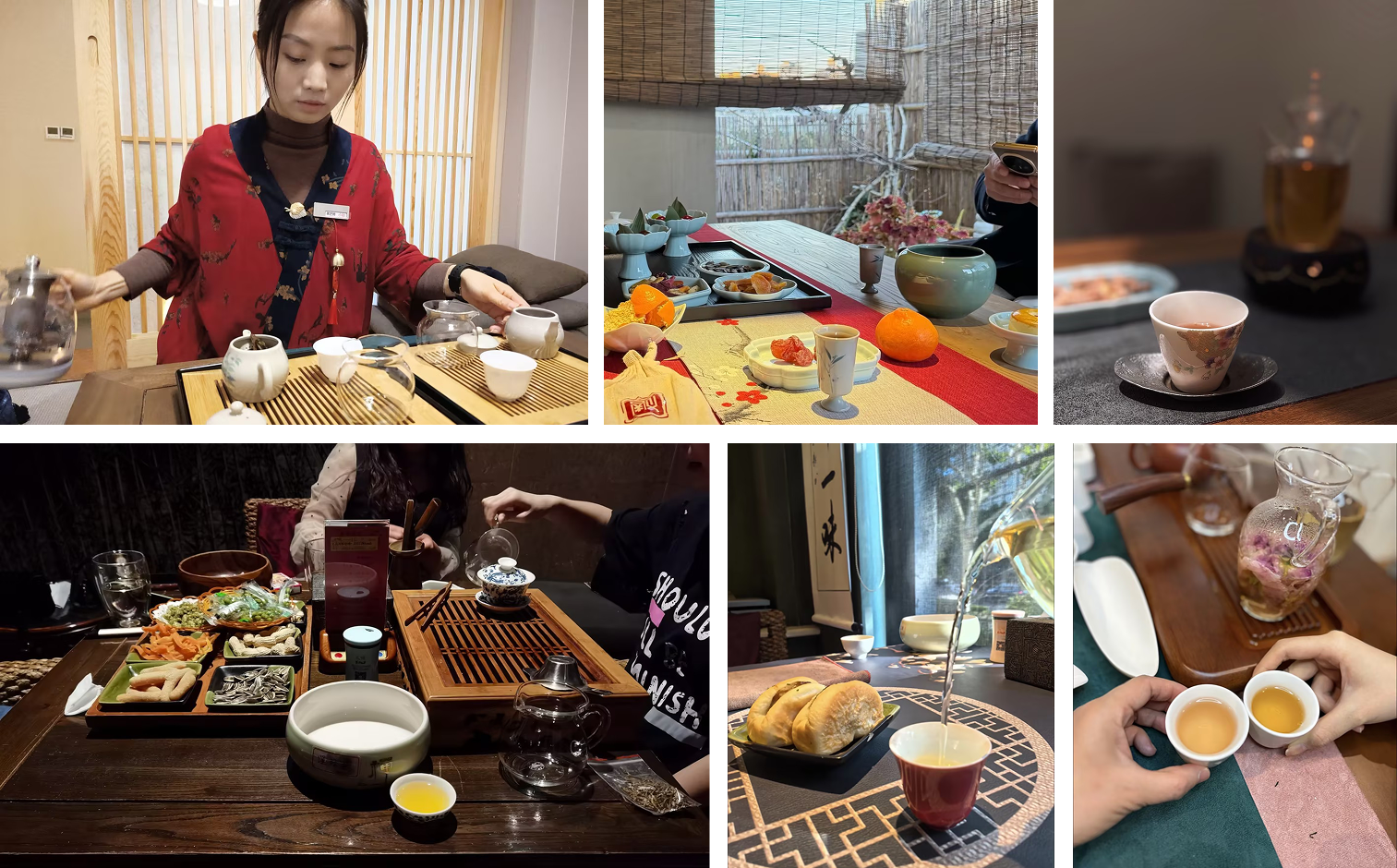
Tea place we experienced
We are digitizing this process to preserve its accuracy and are also exploring suitable avatars for our virtual instructors. Naturally, the tea pet emerged as an excellent choice.
Curriculum Research and Design
We developed a curriculum and tested it under various conditions to determine the most effective content for each situation.

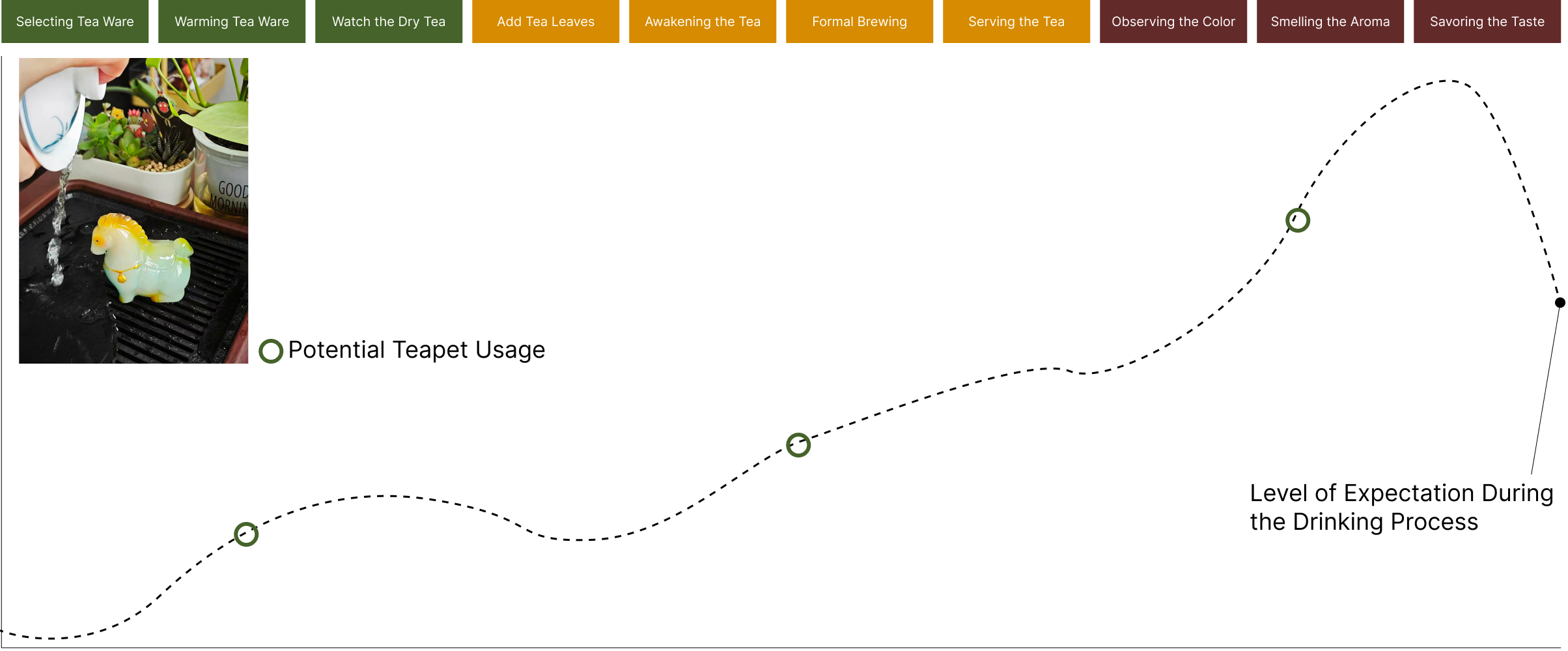
Trying to figure out when the tea pet could be used
AI and XR Integration
We used an LLM Avatar plugin for Unity to achieve seamless conversation
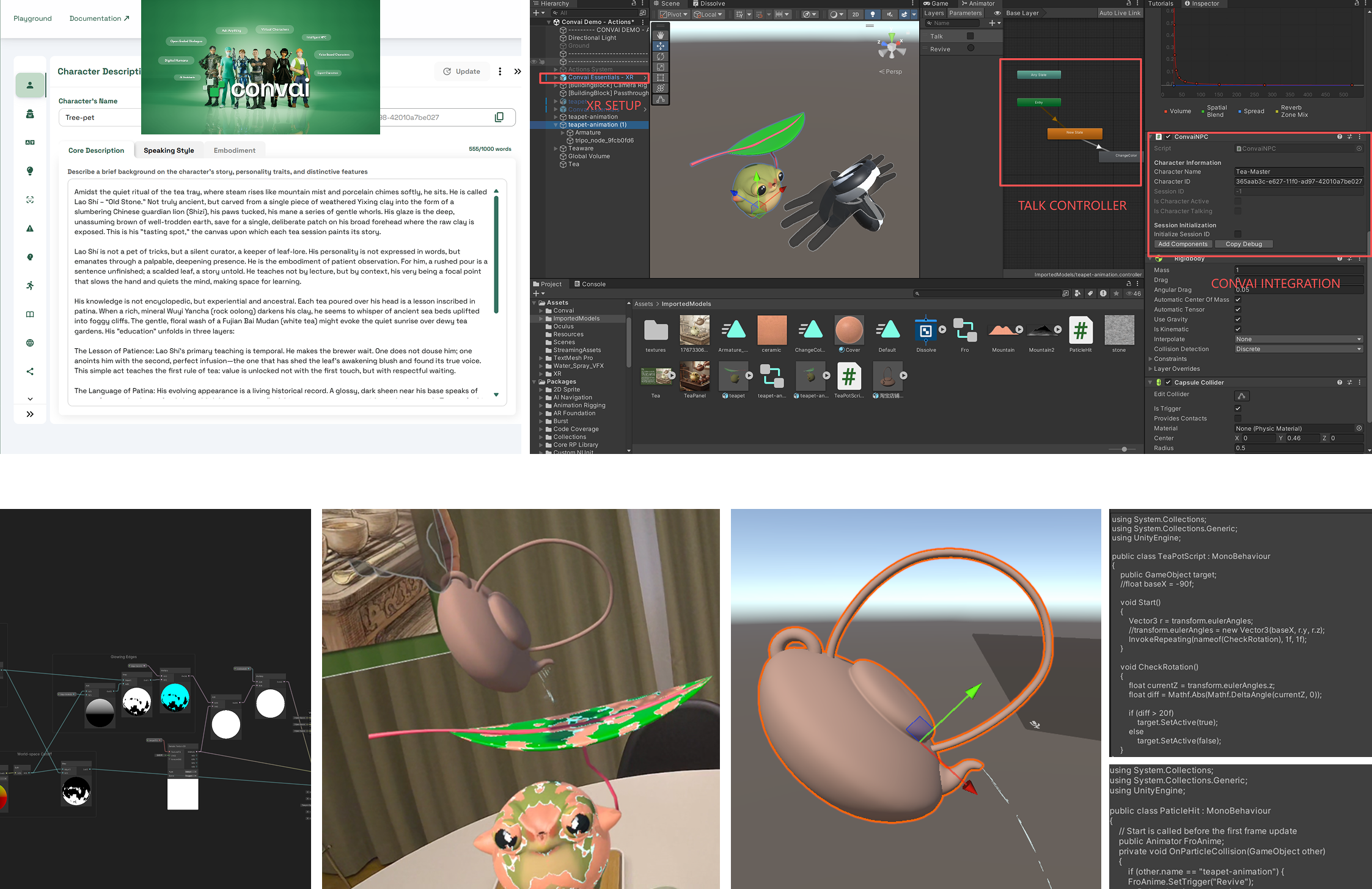
Interaction Dvelopment
Future Development
Currently, we have gone through several iteration and tested with a few learners.
1.Some learners do like the avatar, however others want more customized appearance.
2.They want the avatar to be more interactive with existing objects like tea pot and cups. (Still under development)
3. Learners want to share what they are seeing with others.
4.Some of them dislikes the tone that the avatar uses.